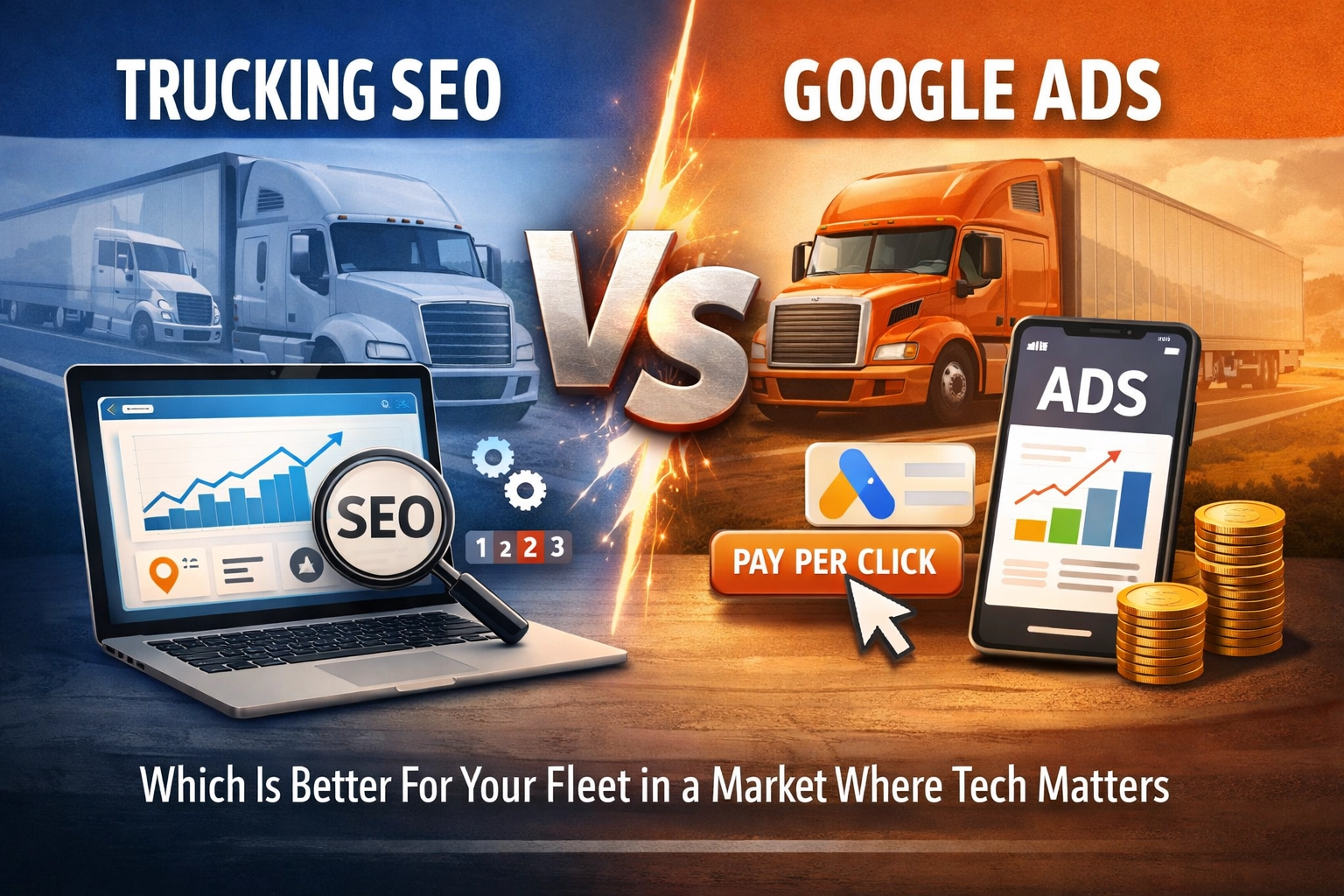
If you're running a trucking fleet in 2026, you've probably asked yourself this question at least once: Should I be investing in SEO or Google Ads? Maybe you've tried one or the other and gotten mixed results. Or maybe you're just tired of watching competitors show up at the top of Google while your company sits on page three.
Here's the truth: there's no one-size-fits-all answer. Both trucking SEO and Google Ads management for trucking companies have their place in a solid digital marketing strategy. But which one is right for your fleet depends on your goals, budget, timeline, and where you're trying to go.
Let's break it down.
What Trucking SEO Actually Does for Your Fleet
Search engine optimization: or SEO: is the process of optimizing your website so it ranks higher in organic (unpaid) search results. When someone Googles "refrigerated trucking companies in Georgia" or "flatbed hauling services near me," you want your company to show up on that first page.
Trucking SEO focuses on building long-term visibility. It involves creating quality content, optimizing your website's technical performance, building backlinks from reputable sites, and targeting keywords that your potential customers are searching for.
The key word here is long-term. SEO doesn't produce overnight results. It takes time to build authority with Google, earn rankings, and start seeing consistent organic traffic. But once you get there, the payoff can be huge.

The Benefits of SEO for Trucking Companies
Cost-effective over time. Once your website ranks for competitive keywords, you're not paying for each click. That traffic is essentially free, which means lower customer acquisition costs as your rankings improve.
Builds trust and credibility. People trust organic search results more than ads. When your trucking company appears at the top of Google organically, it signals authority and reliability to potential customers.
Compounds over time. Good SEO content continues to drive traffic months and even years after it's published. A well-optimized blog post about regional LTL services could bring in leads for years without additional investment.
Targets the entire buyer journey. SEO isn't just about capturing people ready to buy. It also helps you connect with prospects in the research phase, building awareness and trust before they're ready to pick up the phone.
The Drawbacks of Trucking SEO
Takes time. If you need leads this month, SEO probably isn't your best bet. It typically takes 3-6 months (or longer) to see meaningful results, especially in competitive markets.
Requires consistent effort. SEO isn't a "set it and forget it" strategy. You need to consistently publish content, update your site, and earn backlinks to maintain and improve your rankings.
Algorithm changes. Google updates its algorithm regularly. While major disruptions are rare if you're following best practices, there's always some level of uncertainty with organic search.
What Google Ads Brings to the Table
Google Ads (formerly Google AdWords) is the paid side of search marketing. You create ads that appear at the top of search results, and you pay each time someone clicks on them. Think of it as buying your way to the top of Google instead of earning it.
For trucking companies, Google Ads can be a powerful tool to capture high-intent customers who are actively searching for services like yours. If someone searches "emergency freight hauling Chicago," you can have your ad appear immediately, before they even see organic results.
The Benefits of Google Ads for Trucking Fleets
Immediate visibility. Your ads can be live within hours of setting up a campaign. If you need leads fast: whether for a new route, seasonal demand, or a service launch: Google Ads delivers.
Precise targeting. You can target specific keywords, locations, device types, and even times of day. This level of control allows you to focus your budget on the most valuable prospects.
Measurable and testable. Google Ads provides detailed performance data. You can see exactly which keywords, ad copy, and landing pages convert best, then optimize accordingly.
Scalable. When you find a winning campaign, you can increase your budget to drive more leads. When market conditions change, you can dial it back or shift focus quickly.
The Drawbacks of Google Ads
Ongoing cost. Every click costs money. The moment you stop paying, your visibility disappears. In competitive trucking markets, cost-per-click (CPC) for valuable keywords can get expensive quickly.
Requires expertise. Running profitable Google Ads campaigns isn't as simple as writing an ad and turning it on. Poor campaign management leads to wasted budget and low-quality leads.
Ad fatigue and blindness. Some users skip over ads entirely and go straight to organic results. You're also competing with other trucking companies bidding on the same keywords, which drives up costs.
The Real Question: Which One Should You Choose?
Here's where we get practical. Most successful trucking companies don't choose between SEO and Google Ads: they use both strategically. But if you're working with a limited budget or just getting started, here's how to prioritize.
Choose SEO as Your Priority If:
- You're playing the long game. If you can afford to wait 3-6 months for results and want to build a sustainable marketing foundation, start with SEO.
- You want to reduce acquisition costs over time. Organic traffic becomes increasingly cost-effective as your rankings improve.
- You're building authority in a specific niche. If you specialize in temperature-controlled logistics, heavy haul, or a particular region, SEO helps you own that space.
- You have time and resources for content creation. SEO requires consistent effort: publishing blog posts, optimizing pages, and building backlinks.
Choose Google Ads as Your Priority If:
- You need leads now. New service offerings, seasonal spikes, or urgent capacity gaps? Google Ads delivers immediate results.
- You're testing new markets or services. Before investing heavily in SEO for a new route or service type, test demand with Google Ads first.
- You operate in a highly competitive local market. In crowded markets where organic rankings take years to build, paid ads get you in the game fast.
- You want measurable data quickly. Google Ads provides immediate feedback on what keywords and messaging resonate with your audience.
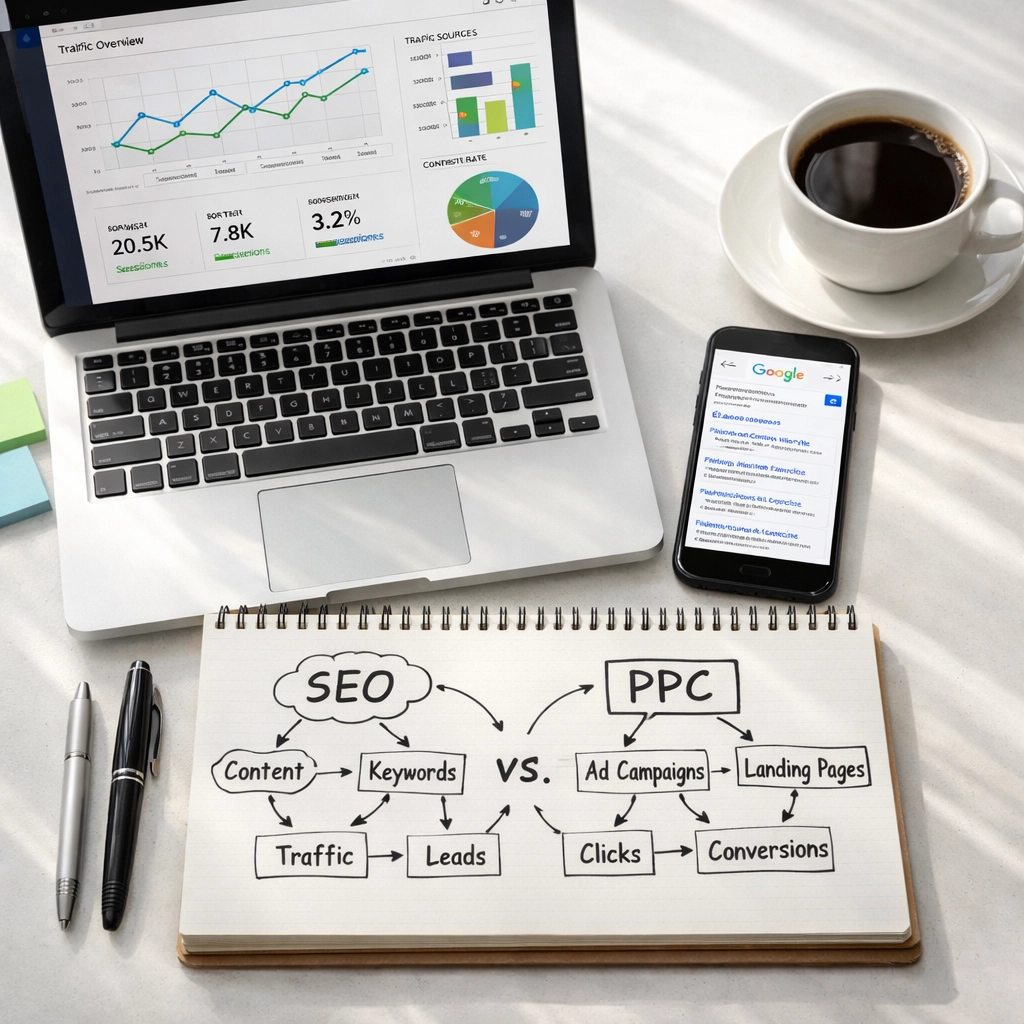
The Hybrid Approach: Using Both to Win
Here's the strategy that works best for most trucking fleets: use Google Ads for immediate demand capture while building SEO for long-term growth. They complement each other beautifully when done right.
Start with Google Ads to identify winners. Run campaigns targeting your most valuable keywords. See which terms drive the highest-quality leads and the best conversion rates. This data is gold for your SEO strategy.
Build SEO content around proven keywords. Once you know which keywords convert through paid ads, create comprehensive content targeting those same terms organically. Over time, as your organic rankings improve, you can reduce ad spend on those keywords.
Use SEO rankings to optimize ad spend. When your website ranks organically for competitive terms, lower your Google Ads bids on those keywords. Reallocate that budget toward keywords where you don't yet rank, maximizing your total visibility.
Capture the entire search results page. When you rank organically and run ads for the same keyword, you dominate the page. This increases brand recognition and gives prospects multiple opportunities to click through to your site.
At Hometown Logistics, we've seen trucking companies significantly improve their lead generation by integrating both channels. The key is having a clear strategy, consistent execution, and the ability to measure what's working.
Making the Decision for Your Fleet
The bottom line? If you have the budget, run both. If you're forced to choose, consider your timeline, budget, and business goals.
Need leads this quarter? Start with Google Ads. Building for the next three years? Invest in SEO. Either way, don't treat these as competing strategies: they're two sides of the same coin.
The trucking industry is getting more competitive every year, and digital visibility matters more than ever. Whether you choose trucking SEO, Google Ads management, or both, the important thing is to start somewhere and commit to consistent execution.
Your competitors are already showing up on Google. The question is: will you?