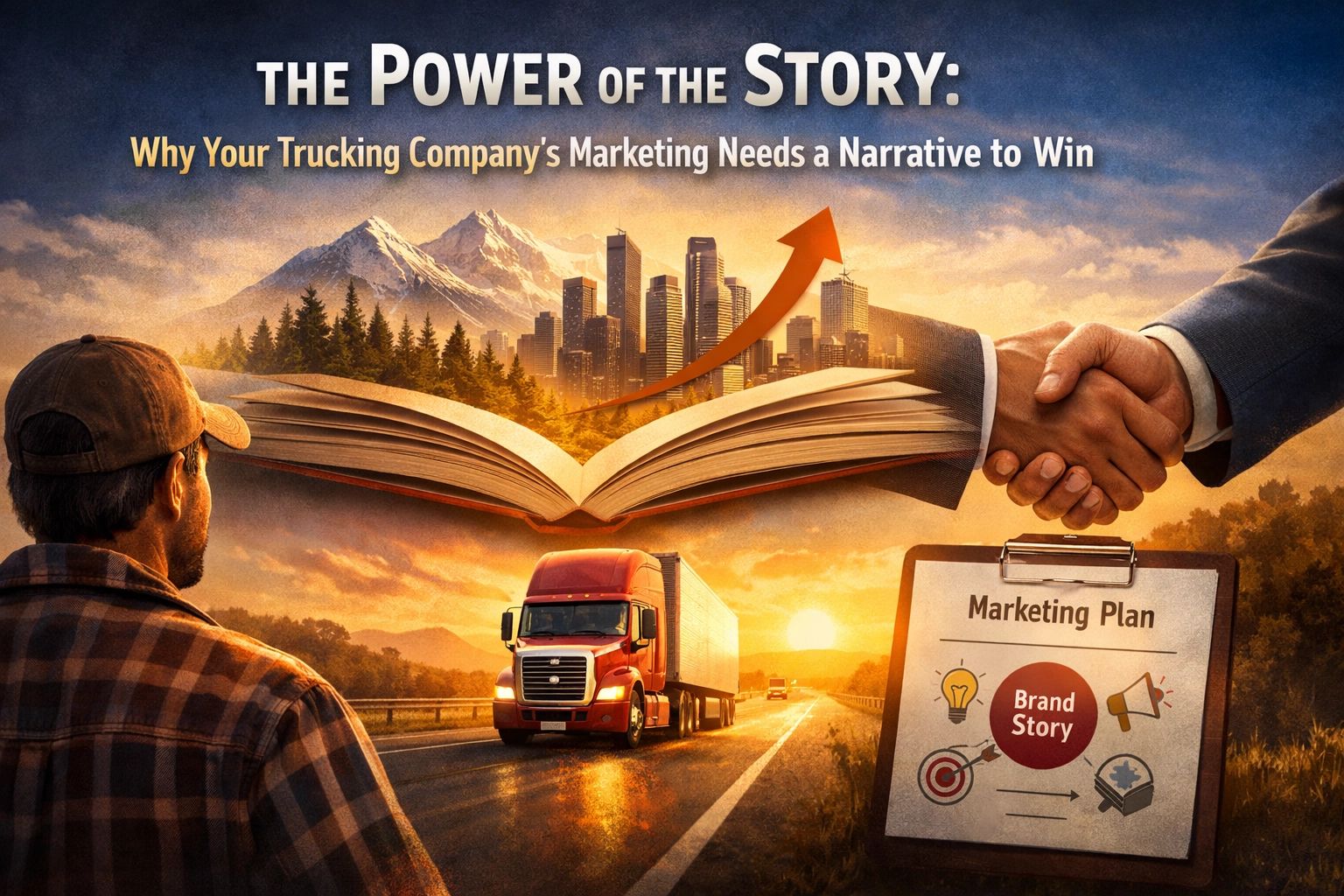
In the world of logistics, it’s easy to get caught up in the numbers. We talk about RPMs, deadhead miles, fuel surcharges, and on-time percentages. We focus on the iron, the Class 8 trucks and the 53-foot reefers. But if your marketing strategy starts and ends with "we have trucks and we move freight," you’re missing the biggest engine of growth available to your business: Storytelling.
Most people think storytelling belongs in a cinema or a novel, not a board room in a trucking terminal. But in 2026, the logistics industry is more crowded than ever. If you want to stand out to shippers and attract the kind of drivers who actually stay for the long haul, you have to stop acting like a commodity and start acting like a brand.
At Hometown Logistics, we’ve seen it time and time again. The companies that win aren’t always the ones with the newest rigs; they’re the ones who have mastered marketing for trucking companies by telling a story that people want to be a part of.
The Commodity Trap: Why "We Haul Freight" Isn't Enough
If you look at ten different trucking company websites, nine of them probably look exactly the same. You’ll see a stock photo of a smiling driver, a map of the lower 48, and a list of services like "LTL, Full Truckload, and Expedited."
When your marketing is generic, you force your customers to make decisions based on one thing: Price.
When you don't have a narrative, you’re just a line item on a spreadsheet. Shippers will drop you the second a cheaper carrier calls them. Drivers will jump ship for an extra two cents a mile because they have no emotional connection to your mission.
Storytelling changes the equation. It moves the conversation from what you do to why you do it and how you do it differently than the guy down the street. It turns a transaction into a relationship.
It’s About the People, Not Just the Payload
Behind every steering wheel and every dispatch desk is a person with a story. Logistics is fundamentally a human business, yet so much logistics marketing feels cold and mechanical.
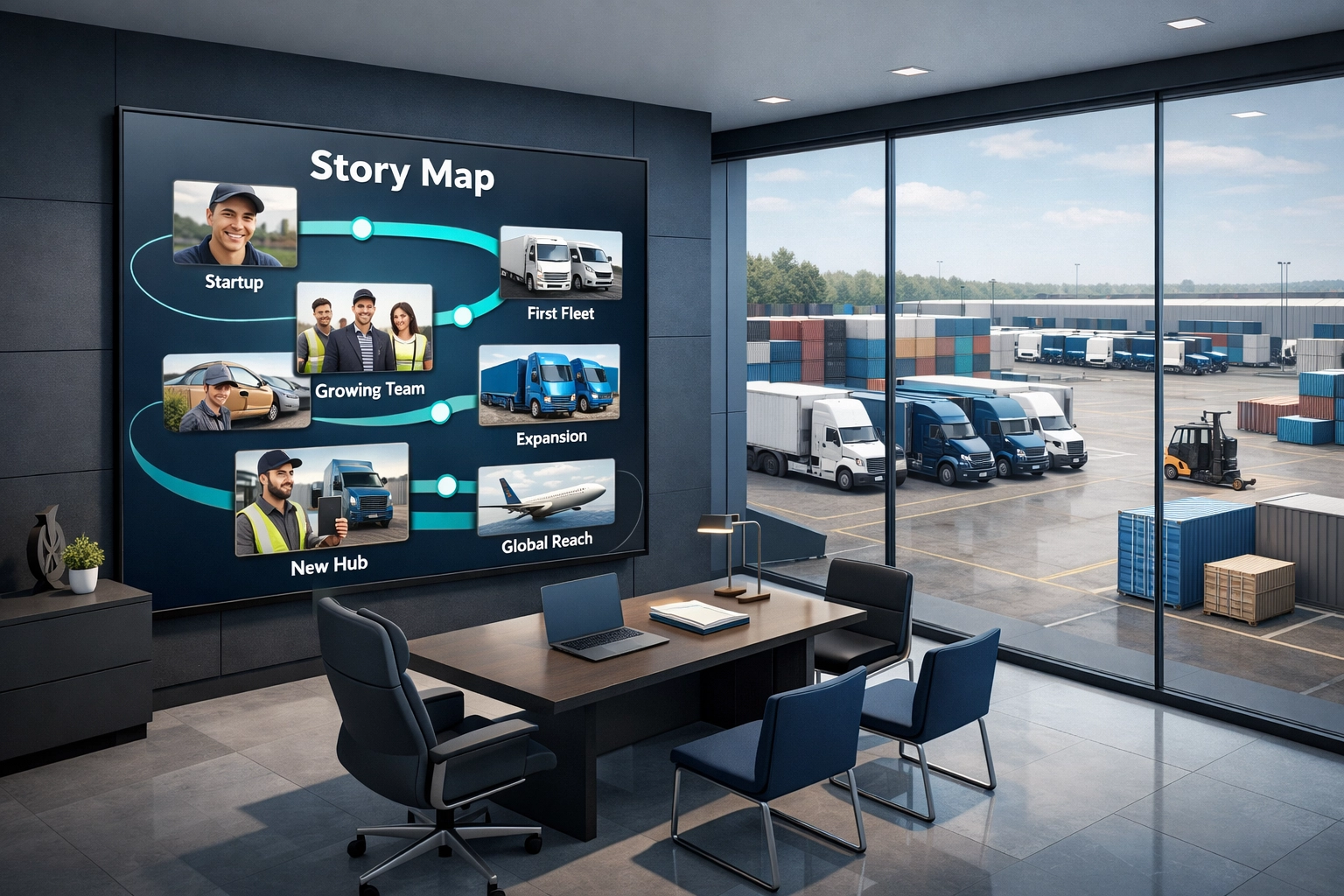
To win in this market, you need to highlight the mission behind the trucks. Are you a family-owned business that treats every driver like a cousin? Tell that story. Did you start with one truck and a dream in a dusty garage? Share that journey.
When you share the human side of your company, you build trust. Shippers aren't just buying space in a trailer; they are buying peace of mind. They want to know that the people handling their high-value freight actually care. By using your website to showcase your team, your community involvement, and your core values, you create a layer of "social proof" that no generic template can replicate.
If you’re wondering if your current site is hitting the mark, check out our post on whether your logistics website really matters in 2026. Spoiler alert: it matters more than you think.
Using Narrative to Solve the Recruiting Crisis
We all know the driver shortage is the elephant in the room. But here’s the truth: there isn’t just a shortage of drivers; there’s a shortage of good companies that drivers actually want to work for.
Most recruiting ads are boring. They list the pay, the home time, and the equipment. But every carrier promises "competitive pay" and "late-model equipment."
A narrative-driven recruiting strategy focuses on the experience of being a driver at your company. Instead of just saying "Great Benefits," show a video of a driver who was able to attend his daughter's graduation because your dispatchers actually respect home time.
At Hometown Logistics, we help fleets build custom job boards and recruiting funnels that do more than just collect applications. They tell the story of your culture. When a driver lands on a page that feels authentic and professional, they feel like they’re joining an elite team, not just filling a seat.

Why Templates are the Enemy of Storytelling
Here is where a lot of trucking companies go wrong: they try to save a few bucks by using a generic website template or a "do-it-yourself" builder.
Here’s the problem with templates: they weren't built for your story. They were built to be "good enough" for everyone, which means they aren't great for anyone. When you use a template, you are literally trying to squeeze your unique brand into a box designed by someone who doesn't know a fifth wheel from a steering wheel.
At Hometown Logistics, we take a different approach. We don’t use templates, and we definitely don’t rely on AI-generated design. We believe that a custom-designed website is the only way to truly communicate a brand's narrative.
A custom build allows us to:
- Direct the User Experience: We can guide a shipper or a driver through your story in a specific order that builds trust.
- Highlight Your Unique Selling Proposition (USP): Whether it’s your specialized equipment or your 99% on-time record, a custom design makes sure your strengths aren't buried in a sub-menu.
- Ensure Professionalism: A "cheap-looking" website tells a shipper that you might provide "cheap-looking" service. In logistics, professionalism is the currency of trust.
We’ve seen how 7 common mistakes on trucking websites can be fixed simply by moving away from generic designs and toward a branded strategy.
How to Start Telling Your Story
You don't need to be a professional writer to start using storytelling in your marketing. You just need to be authentic. Here are a few places to start:
1. The "About Us" Page
Stop using corporate-speak like "leveraging synergistic logistics solutions." Talk like a human. Tell the story of why the company was founded and what you stand for. If you’re a trucking digital marketing agency or a carrier, the "About Us" page is often the most visited page after the homepage. Make it count.
2. Case Studies (The "Problem-Solver" Narrative)
Instead of just saying you provide "excellent service," write a short post about a time a customer was in a bind and your team went above and beyond to fix it. This proves your value through action, not just claims.
3. Driver Spotlights
Feature your drivers. Give them a platform to share their stories. This not only makes your current drivers feel appreciated but shows prospective hires that you see them as people, not just logbook entries.
The ROI of a Good Story
You might be thinking, "This sounds nice, T.J., but does it actually move the needle?"
Yes, it does. In a study of logistics marketing, companies that utilized narrative-driven campaigns saw massive spikes in engagement. Why? Because people remember stories 22 times more than they remember facts and figures alone.
When a shipper is looking for a new partner, they’re going to remember the company that had a clear mission and a professional, custom-designed website. They’re going to remember the brand that felt "real."
If your marketing feels stagnant, it might be because you’ve focused too much on the logistics and not enough on the marketing. You can see how we've helped other businesses by checking out our comprehensive web development approach.
Final Thoughts: Your Story is Your Edge
The trucks are the body of your business, but the story is the soul. In an industry as competitive as ours, you can’t afford to be invisible.
Don't let your brand get lost in a sea of templates and AI-generated fluff. Invest in a branded strategy that reflects the hard work you put into your fleet every single day. Whether you need a custom website design for your logistics business or a full-scale digital marketing plan, we’re here to help you tell your story.
Ready to stop being a commodity and start being a brand? Contact us today and let’s get to work on building a narrative that wins.
And if you want to keep up with the latest trends in the industry without the fluff, make sure to join our newsletter. We promise to keep it real.